Choose by material and usable volume
14 Yard vs 20 Yard Bin: Which Size Fits?
A larger number does not automatically mean a better rental. The useful choice depends on what you are loading, how dense it is, how much driveway space is available and whether bulky pieces can be broken down safely.
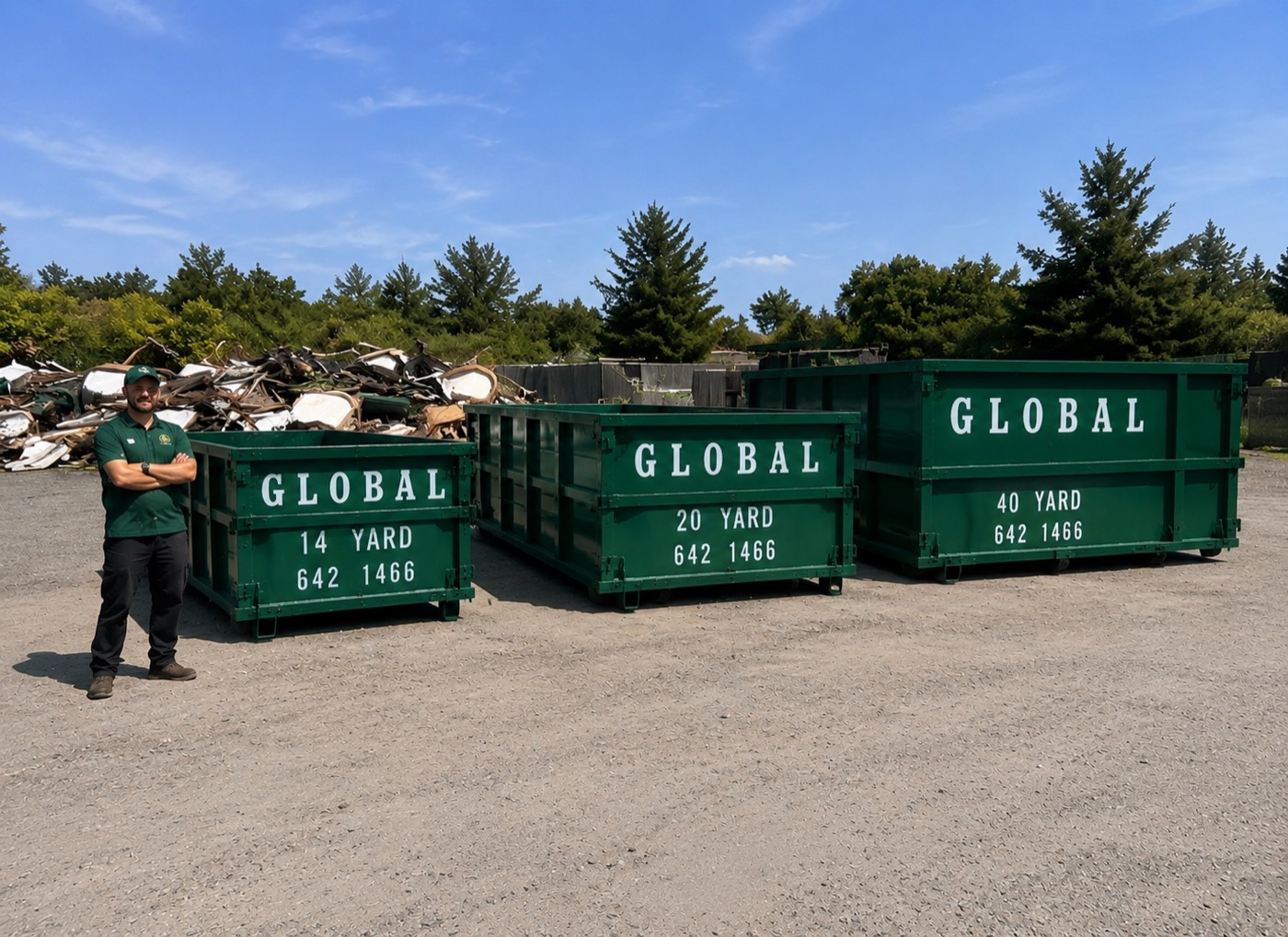
Quick answer
Choose 14 yards for tighter or heavier jobs; 20 yards for more mixed volume
A 14 yard container is often the better starting point for smaller renovations, roofing projects, tighter driveways and approved heavy-fill plans. A 20 yard container adds useful volume for mixed renovation debris such as wood, drywall, cabinets and flooring. Exact dimensions vary by container, so request measurements when clearance is tight.
14 yard
Where the smaller container makes sense
The 14 yard bin is easier to consider for narrower residential settings and projects that create a moderate amount of debris. It is commonly discussed for smaller tear-outs, roofing material and heavy fill because dense loads require controlled volume.
Do not use the container name as a weight allowance. Fourteen cubic yards describes capacity, not how much the truck may legally carry. Concrete, soil and asphalt can reach a transport limit with substantial empty-looking space remaining.
- Smaller bathroom or room renovation.
- Roofing tear-off after material confirmation.
- Concrete, soil or asphalt under a dedicated heavy-fill plan.
- A property where a larger container would interfere with access.
20 yard
Where the extra volume earns its space
The 20 yard bin is a useful middle option for mixed renovation work. Cabinets, lumber, flooring, drywall and bulky fixtures can consume volume before they create the same density as concrete or soil.
A medium renovation with several material types may be easier to load into a 20 yard bin because workers have more room to distribute pieces evenly. It is still important to keep the load level and respect the confirmed material rules.
- Kitchen or multi-room renovation debris.
- Flooring, drywall, wood and cabinetry.
- Furniture and non-hazardous household cleanout material.
- Contractor work that is too large for a compact bin but does not need a 40 yard container.
Real sizing
Estimate the debris, not the room
Two kitchens of the same floor area can create very different loads. One may involve cabinet doors and countertops; the other may include plaster, tile, subfloor and several layers of old finishes. Write down what is actually being removed and estimate the number of bulky pieces.
Photos help. Lay representative debris in a visible area or photograph the rooms before demolition. A dispatcher can give a better starting recommendation from materials and images than from a statement such as “medium renovation.”
- Count cabinets, doors, fixtures and large furniture.
- Note tile, plaster, concrete board or masonry because they add weight.
- Separate reusable or donatable items first.
- Plan a swap rather than overfilling one container.
Before dispatch
Request exact measurements when clearance is close
Bin dimensions can differ between fleets even when the capacity label is the same. If a gate, eave, parked vehicle or narrow drive creates a constraint, ask for the footprint and delivery clearance of the actual available container.
Keep the truck path clear on delivery and pickup day. A perfectly sized bin still causes delays if a vehicle blocks the approach or if debris is stacked around the pickup side.
- Width and length of placement area.
- Overhead wires and tree branches.
- Gate openings and turning room.
- Space needed to open the bin door, when applicable.
Local delivery planning
Use this guide in your Ontario service area
This page applies to customers planning work in the Greater Toronto Area and confirmed Southern Ontario service areas. The same material, access and timing checks are useful across the region, but delivery is never automatic: the exact address, material, route, container inventory and requested date must be confirmed before booking.
Use the relevant city page for local service context, then call 905-781-1431 for the actual availability check.
Keep planning
Related bin-rental resources
Get a direct answer
Tell us about the material and location
Send the basics and we will follow up. For the fastest availability check, call directly.
905-781-1431Questions customers ask
Frequently asked questions
Is a 20 yard bin always more expensive than a 14 yard bin?
Not under every offer. Global Waste Removal currently advertises $599 for any available general-debris dumpster size with 1,000 kg and 10 days included. Heavy-fill loads and availability require confirmation.
Can I fill a 20 yard bin with concrete?
Do not do so without approval. Dense material is commonly limited to a smaller heavy-fill plan because vehicle weight limits can be reached before the bin looks full.
What if I choose a bin that is too small?
Call before overfilling it. A pickup or swap is safer and easier to price than loading above the rim or adding unapproved material.
Ready to check availability?
Call Global Waste Removal
Tell us the city, material, approximate amount, placement area and preferred delivery date.